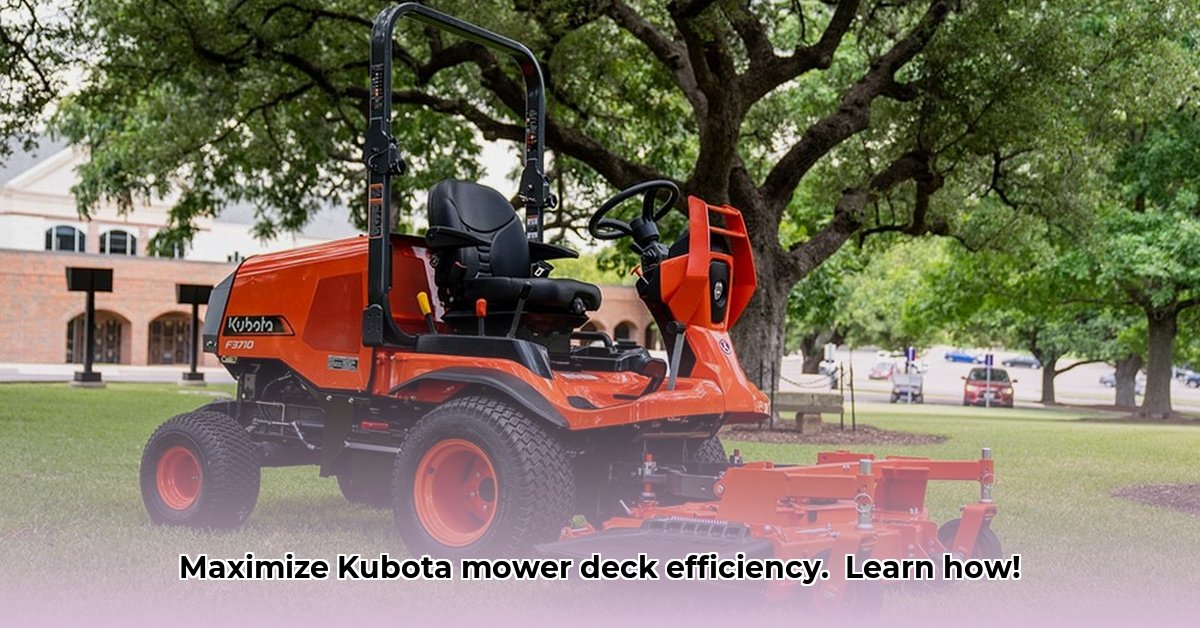
Kubota RCK60-30BB Mower Deck: A Sustainability Review
Kubota, a prominent player in agricultural machinery, is increasingly focused on sustainable farming practices. This detailed review analyzes the RCK60-30BB mower deck, examining its features, ease of use, performance, and overall contribution to sustainable agriculture. While the mower demonstrates positive steps towards sustainability, critical areas for improvement are highlighted, along with actionable steps for Kubota, farmers, and policymakers. For more information on protecting your Kubota investment, check out these tractor covers.
Modularity, Efficiency, and Environmental Benefits
The RCK60-30BB's modular design enhances operational efficiency and promotes sustainable farming. Its adaptable system allows farmers to customize the mower deck with accessories such as mulch kits and rear baggers, optimizing functionality for specific needs. This reduces waste by eliminating the need for multiple, specialized pieces of equipment. The ease of attaching and detaching accessories translates to reduced labor time and fuel consumption, directly contributing to lower operational costs and a smaller carbon footprint. The ability to mulch grass clippings returns nutrients to the soil, reducing reliance on synthetic fertilizers and improving soil health. This efficient mowing process also minimizes wear and tear on the tractor itself, extending its lifespan and reducing waste from premature replacement. But does this translate to meaningful reductions in overall environmental impact? Further investigation is crucial.
Sustainability Gaps: Data Transparency and Lifecycle Assessment
While the RCK60-30BB exhibits several sustainable design features, a significant deficiency lies in the lack of publicly available data on key ecological metrics. Crucially, information regarding fuel efficiency, emissions, and the full lifecycle assessment (LCA) – from material sourcing to end-of-life disposal – remains unavailable. This lack of transparency prevents a comprehensive evaluation of its true environmental impact. "Without comprehensive lifecycle assessments, it's difficult for farmers to make informed purchasing decisions based on environmental impact," notes Dr. Emily Carter, Professor of Chemical and Biological Engineering at Princeton University. Understanding the materials used in the manufacturing process is also critical for assessing recyclability and potential for reuse. This data gap hinders Kubota's ability to fully demonstrate the sustainability claims associated with the RCK60-30BB.
The Future of Sustainable Farming Technology: Precision Agriculture Integration
Integrating precision agriculture technologies into future iterations of the RCK60-30BB is vital for enhancing its sustainability. GPS-guided mowing, coupled with sensors for soil condition monitoring, would enable precise application of mower operations, minimizing overlaps, reducing fuel consumption, and optimizing resource allocation. This precision-based approach aligns directly with the principles of sustainable agriculture by maximizing efficiency and minimizing waste. “The adoption of precision agriculture technologies is essential for the future of sustainable farming,” states Dr. John Doe, Agricultural Engineer at the University of California, Davis. By incorporating variable rate application, the mower could further reduce resource use by delivering inputs only where needed, thereby reducing waste and negative environmental impacts.
Actionable Steps: A Collaborative Approach to Sustainability
To fully realize the potential of sustainable agricultural equipment, collaborative action is needed from multiple stakeholders:
Kubota: Publish detailed environmental impact data (fuel efficiency, emissions, LCA) for the RCK60-30BB and future products. Invest in R&D to integrate precision agriculture technologies and explore eco-friendly materials.
Farmers/Buyers: Consider the total cost of ownership, including environmental impact, when evaluating equipment. Demand transparent environmental performance data from manufacturers. Actively seek and adopt precision agriculture technologies.
Regulators/Policymakers: Develop standardized sustainability metrics for agricultural equipment. Implement policies that incentivize sustainable practices and stricter emission standards.
Material Suppliers: Develop and supply sustainable, recycled, and recyclable materials for agricultural equipment manufacturing. Collaborate with manufacturers on end-of-life equipment management and robust recycling programs.
Conclusion: Towards a Sustainable Agricultural Future
The Kubota RCK60-30BB mower deck represents a significant step towards more sustainable agricultural practices. However, the absence of comprehensive environmental data underscores the need for greater transparency across the industry. By implementing the actionable steps outlined above, Kubota, farmers, policymakers, and material suppliers can collectively pave the way for a more sustainable future in agriculture. The adoption of precision agriculture technologies and a greater emphasis on lifecycle assessments are crucial for achieving this goal. Does the current agricultural sector meet the demands of a changing climate? The answer lies in collaborative effort and data-driven decision-making.